The Biology of Healing Related to Your Menstrual Cycle & Regenerative Aesthetics

If you've ever noticed that your skin seems to glow one week, break out the next, and suddenly become dry or unusually sensitive just before your period, you're not imagining it.
As women, we instinctively know that our bodies are not static. We experience shifts in energy, mood, appetite, strength, sleep, cognition, and even the way we communicate throughout the month. Sports medicine has begun exploring how hormonal fluctuations influence athletic performance and recovery. Neuroscience continues to uncover the relationship between sex hormones, cognition, and mood. We readily acknowledge that the menstrual cycle can influence nearly every system in the body.
So why would we assume the skin behaves any differently?
The skin is one of the body's largest endocrine-responsive organs. It contains receptors for estrogen, progesterone, and androgens, allowing it to respond continuously to hormonal fluctuations throughout the menstrual cycle. Every month, these hormones influence collagen synthesis, epidermal barrier function, wound healing, sebum production, inflammatory signaling, vascular activity, immune response, and countless other physiological processes occurring beneath the surface.
Most of the time, these changes reveal themselves in familiar ways. Perhaps your complexion looks brighter around ovulation. Maybe your skin becomes oilier during the luteal phase or feels noticeably drier and more reactive as menstruation approaches. These are changes many women recognize, even if they don't always understand the biology behind them.
Have you considered what happens when we intentionally challenge the skin through a regenerative treatment like microneedling?
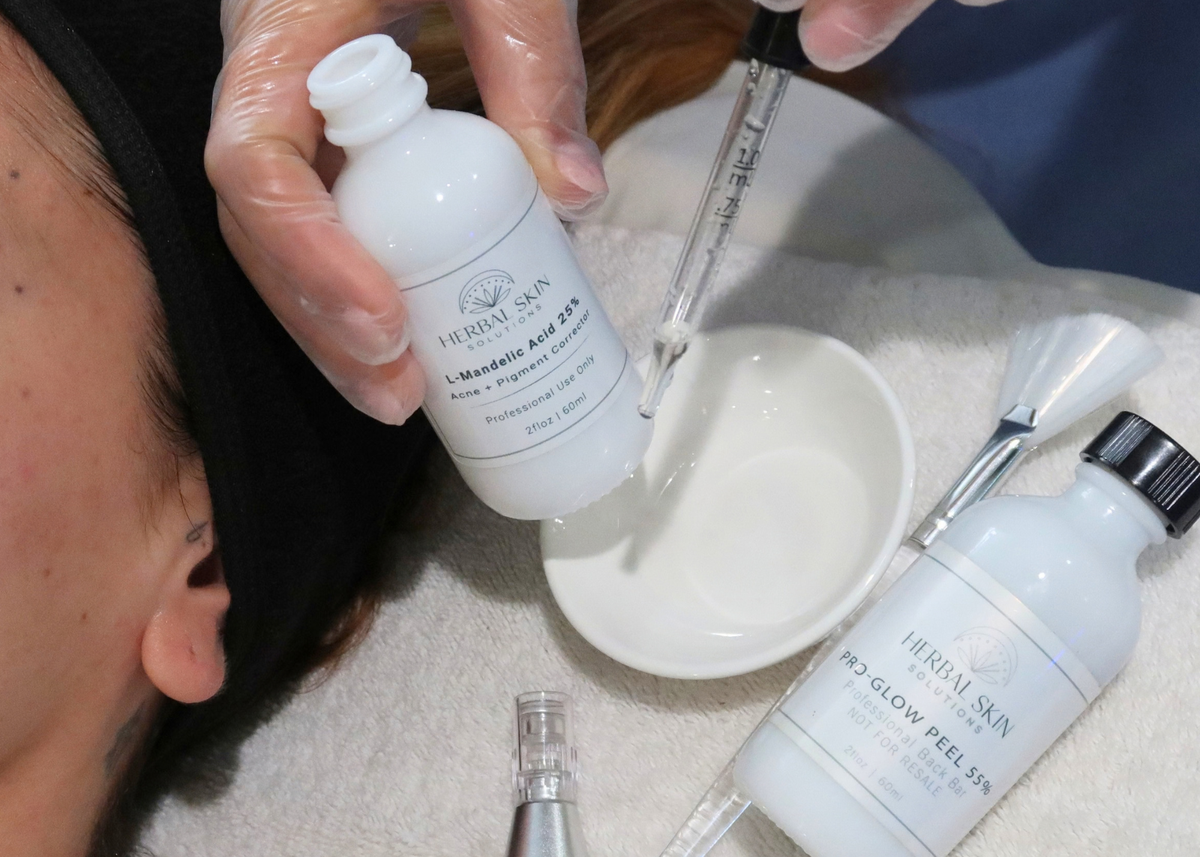
Microneedling relies on the skin's remarkable ability to interpret a controlled injury and coordinate an intricate healing response. Fibroblasts begin producing new collagen, inflammatory cells migrate into the tissue, growth factors are released, blood vessels expand, and keratinocytes begin rebuilding the epidermis. None of these processes occur in isolation. They unfold within a body whose hormonal environment is changing continuously throughout the month.
This raises a fascinating question.
If hormones influence nearly every pathway involved in tissue repair, could they also influence the way the skin responds to microneedling? The answer, like most questions in physiology, is far more nuanced than a simple yes or no.
Microneedling Is More Than Collagen Induction
When we think about microneedling, we often reduce it to one outcome: collagen production. While collagen remodeling is certainly the goal, it represents only the final chapter of a remarkably complex biological process.
Long before new collagen fibers are deposited, the skin must recognize injury, recruit immune cells, regulate inflammation, remove damaged tissue, stimulate angiogenesis, activate fibroblasts, synthesize extracellular matrix proteins, restore barrier function, and gradually reorganize newly formed collagen into stronger, healthier tissue.
Every stage depends on precise biochemical communication.
Growth factors must be released at the appropriate time. Cytokines must activate and resolve appropriately. Matrix metalloproteinases must degrade damaged collagen before fibroblasts can replace it with new structural proteins. Blood vessels must expand to deliver oxygen and nutrients while immune cells carefully coordinate inflammation without allowing it to become excessive. This orchestration is what ultimately determines how well the skin heals.
The fascinating part is that hormones influence nearly every one of these processes.
Estrogen, The Architect of Regeneration
If there were a single hormone that regenerative medicine researchers would choose to bottle, it would likely be estrogen.
Estrogen has profound effects on the skin's regenerative capacity. Fibroblasts express estrogen receptors, allowing this hormone to directly influence collagen synthesis, elastin production, and extracellular matrix organization. It also promotes epidermal proliferation, increases hyaluronic acid synthesis, enhances ceramide production, improves barrier function, and supports healthy microvascular circulation.
In wound-healing research, estrogen has repeatedly demonstrated its ability to accelerate re-epithelialization, regulate inflammatory signaling, and improve overall tissue repair. This is one reason postmenopausal estrogen deficiency is associated with thinner skin, delayed wound healing, reduced collagen density, and impaired barrier function.
During the follicular phase of the menstrual cycle, estrogen rises steadily toward ovulation. Clinically, many women notice brighter skin, improved hydration, and a more resilient complexion during this time. From a regenerative perspective, this creates an environment that appears highly supportive of efficient healing.
It is important, however, to distinguish biological plausibility from clinical proof. Although estrogen clearly influences many mechanisms involved in wound repair, there is currently no evidence demonstrating that microneedling performed during high-estrogen phases produces significantly greater long-term collagen remodeling than treatments performed during other phases of the cycle.
What estrogen may influence is not the destination, but the journey.
Customizing Care for the Follicular Phase:
Because the skin is highly resilient and primed for brightening during the follicular phase, we can confidently introduce targeted support.
-
In the Treatment Room: Optimize this phase by utilizing the AnteAGE Brightening Micro-Channeling Growth Factor Solution cocktailed with pure High Molecular Weight Hyaluronic Acid for an active, highly supportive glide.
-
At-Home Care: Capitalize on rising estrogen by introducing additional brightening support 24 hours post-microneedling, such as the Vitamin C+ Enhancement Serum, to maximize cellular communication and radiance.
Progesterone Changes the Biological Landscape
Following ovulation, progesterone becomes the dominant hormone. This transition alters the skin in ways that extend far beyond increased oil production.
Progesterone stimulates sebaceous activity, contributes to fluid retention, alters vascular permeability, and influences immune signaling throughout the skin. Many women experience increased congestion, heightened inflammatory acne, and greater skin reactivity during this phase.
These changes do not necessarily indicate impaired healing. Rather, they represent a different physiological environment. Instead of existing in a state optimized for rapid regeneration, the skin begins responding to a hormonal profile with different priorities. For practitioners, this may explain why some patients experience more persistent erythema, increased edema, or greater post-treatment tenderness during the luteal phase despite ultimately achieving excellent clinical outcomes.
Customizing Care for Ovulation & Early Luteal Shifts:
As the skin shifts its priorities, its demand for deep hydration and barrier reinforcement increases.
-
In the Treatment Room: Calm vascular permeability and flood the tissue with moisture by finishing the microneedling treatment with a hydrating cellulosic hyaluronic acid sheet mask.
-
At-Home Care: 24 hours post-treatment, the skin requires intentional nourishment. Layer the Squalane Pro-Healing Plant Medicine Serum over your water-based serums, lock it in with a healing cream barrier support moisturizer, and consider sealing the routine by pressing Neroli Nirvana over the top.
Inflammation Is Not the Enemy
Perhaps the most misunderstood aspect of microneedling is inflammation itself. We often speak about inflammation as though it were something to eliminate. In reality, inflammation is the event that makes regeneration possible.
Without inflammatory signaling, fibroblasts would never receive the biochemical instructions necessary to begin producing new collagen. Growth factors would not be released. Damaged tissue would not be removed. The wound-healing cascade would fail before it ever began.
The goal is not to avoid inflammation, but instead to regulate it.
This becomes particularly interesting when we consider the menstrual cycle. During the late luteal phase and menstruation, inflammatory mediators—including prostaglandins, interleukins, and other cytokines—naturally fluctuate throughout the body. Pain perception changes. Vascular responses change. Immune activity shifts.
While current evidence does not suggest these changes diminish the long-term effectiveness of microneedling, they may help explain why patients often report differences in tenderness, redness, swelling, or recovery from one treatment to the next, even when every other variable remains unchanged.
The biology of healing has not changed, the biological environment in which healing occurs has.
Customizing Care for the Late Luteal Phase & Menstruation:
When you are at the point in the month where fluid retention is higher or breakouts are more likely, focus on detoxification and calming.
-
In the Treatment Room: Address hormonal fluid retention by performing microcurrent layered over our bioelectric Petal Jelly Stem Cell Mask. If the client is experiencing a breakout-prone phase, this is the exact time to integrate targeted LED and High Frequency therapies.
-
At-Home Care: Manage late-luteal fluid retention by spending a few minutes performing gentle Gua Sha and facial cupping to manually detoxify that fluid.
The Questions Regenerative Aesthetics Is Still Working On Answering
Perhaps the most exciting aspect of this conversation is what we do not yet know.
Could hormonal fluctuations influence angiogenesis following controlled micro-injury? Do fibroblasts communicate differently with surrounding extracellular matrix proteins depending on estrogen exposure? Does hormonal status alter epidermal recovery or barrier restoration following treatment? Could endocrine signaling influence vascular remodeling, melanocyte activity, or the duration of post-inflammatory erythema? Might future research identify subtle differences in treatment timing that improve patient comfort or optimize recovery?
At present, these questions remain largely unanswered. Not because they lack importance, but because regenerative aesthetics has only recently begun exploring the remarkable complexity of personalized skin biology.
A More Personalized Future
For decades, skincare has largely been built around the assumption that skin behaves consistently from one day to the next. Modern science suggests something far more fascinating.
The skin is not a static organ. It is a living tissue continuously responding to conversations between the endocrine, immune, nervous, and vascular systems. Hormones do not simply influence fertility or mood—they help shape the biological environment in which every regenerative process unfolds.
This does not mean there is a universally "correct" day to perform microneedling. Nor does it suggest that treatments performed during one phase of the menstrual cycle are inherently superior to another.
It means something far more important. It reminds us that no two healing environments are ever truly identical.
As regenerative medicine continues advancing toward increasingly personalized care, understanding the hormonal physiology of the skin may become another valuable piece of the clinical puzzle. Just as we already consider age, Fitzpatrick type, medications, lifestyle, nutrition, and barrier health when developing treatment plans, one day we may also consider the dynamic hormonal landscape in which healing occurs.
Because perhaps the future of regenerative aesthetics isn't about changing the treatment. Perhaps it's about better understanding the biology of the person receiving it.